Start Coding with Python Programming
Learn Python from fundamentals to automation, APIs and data handling, with hands-on practice building useful programs.
- Programming fundamentals
- Automation scripts
- APIs and data handling
- Problem solving

About Python Programming
A clear picture of what you will learn and where it applies.
Python is a readable, versatile programming language used for automation, web development, data work and AI.
Beginners, students, analysts and professionals who want to automate work or start a coding career.
It removes repetitive manual work, connects systems through APIs and processes data efficiently.
Software teams, data and AI projects, testing, DevOps, finance and research.
A closer look at learning Python Programming
Understand the skills, practice and real-world context behind the programme.
Understanding the subject
Python Programming is best learned as a set of connected skills rather than a list of definitions. The course introduces the ideas behind the subject, shows how the main tools are used and gives learners a structure for practising independently. A strong foundation makes it easier to understand new tools later because learners can recognise the problem a tool is designed to solve. The aim is to build practical understanding, not simply familiarity with terminology.
A structured route from foundations to application
The learning roadmap moves through Python Basics, Control Flow and Functions, Data Structures, Files, Modules and OOP. Each stage prepares learners for the next one: concepts are introduced, demonstrated and then applied through exercises. Learners should pause to revisit topics that feel unfamiliar and avoid rushing through a module just to reach the final project. This step-by-step approach is especially useful when several tools work together and a mistake in one stage can affect the rest of the workflow.
Turning lessons into practical work
During practice, learners can work towards outcomes such as Write clean Python programs, Use functions, modules and OOP, Automate file and data tasks. Project examples include Automation Script, API Integration, Data-Processing Tool. These examples are intended to illustrate the kind of work that can help reinforce the subject; final assignments and trainer-led activities may vary. The value comes from understanding the decisions behind the result, documenting the process and being able to explain what changed when an issue appeared.
Tools, judgement and real-world context
The course references tools such as Python, VS Code, Git, pandas, requests, pytest. Software is important, but good results also depend on judgement: selecting an appropriate method, checking the quality of inputs, handling errors and communicating limitations. Small programs are a good way to develop confidence. Begin with clear input and output, split repeated work into functions, handle expected errors and test unusual cases before expanding a script into a larger tool. This practical context helps learners see how the subject is used beyond a classroom exercise and why consistent working habits matter.
Building towards career readiness
Skills from Python Programming may be relevant to roles such as Junior Python Developer, Automation Engineer Trainee, QA Automation Assistant, Python-based Data Analyst, with applications across Software and IT, Finance, Data and analytics, Testing and DevOps, Research. These are possible directions rather than promises of employment. Learners can strengthen their profile by completing projects, explaining their decisions, maintaining a portfolio where appropriate and practising how to discuss their work. Progress depends on prior experience, consistency, feedback and the requirements of the roles being pursued.
 Why Learn This Course
Why learn Python Programming?
Skills that translate into practical, portfolio-ready ability.
Strong fundamentals
Variables, loops, functions and logic that transfer to any language.
Automation
Write scripts that handle files, spreadsheets and repetitive tasks.
APIs and data
Fetch, parse and process data from web services and files.
Gateway to data and AI
Python is the base for data science, ML and backend work.
Readable, maintainable code
Use functions, modules, naming and error handling to make programs easier to understand and improve.
Practical debugging
Trace errors, test assumptions and use small repeatable checks to make scripts more dependable.
A learning experience built around practice
Practical learning
Hands-on exercises tied to each module.

Guidance from trainers
Learn with trainers who work with the subject.
Flexible options
Ask our counselor which learning formats suit you.
Structured training
A step-by-step roadmap from basics to project work.
Learning RoadmapPython Programming Curriculum
Tap a module to see what it covers.
1Module 1Python Basics
Syntax, variables, data types, input and output.
2Module 2Control Flow and Functions
Conditions, loops, functions and modular code.
3Module 3Data Structures
Lists, tuples, dictionaries, sets and comprehensions.
4Module 4Files, Modules and OOP
File handling, packages, classes and object-oriented design.
5Module 5APIs and Automation
HTTP requests, JSON, scripts and scheduled tasks.
6Module 6Testing, Debugging and Mini Project
Error handling, unit tests, Git and an end-to-end project.
 Practical Projects
Build while you learn
Illustrative examples of project work. Final projects may vary by batch.
Automation Script
Automate a repetitive file or spreadsheet task.
API Integration
Fetch data from a public API and present it clearly.
Data-Processing Tool
Build a command-line tool that cleans and summarises data.
What you will work with
Exact tools may be updated by batch.
 Careers and Future Opportunities
Where Python Programming can take you
Possible directions only. Outcomes depend on your skills, portfolio and the market.
Potential entry-level roles
- Junior Python Developer
- Automation Engineer Trainee
- QA Automation Assistant
- Python-based Data Analyst
Future growth paths
- Backend Developer
- Data Engineer
- Software Engineer
 Industry applications

Not sure which course fits you?
Our counselor can help you compare options and choose a learning path.
Meet the LearnBizness mentors
Mentor allocation for each batch is confirmed at enrolment.

Aman Khan
Certified Digital Marketing & UI/UX Expert (Meta Ads Specialist)
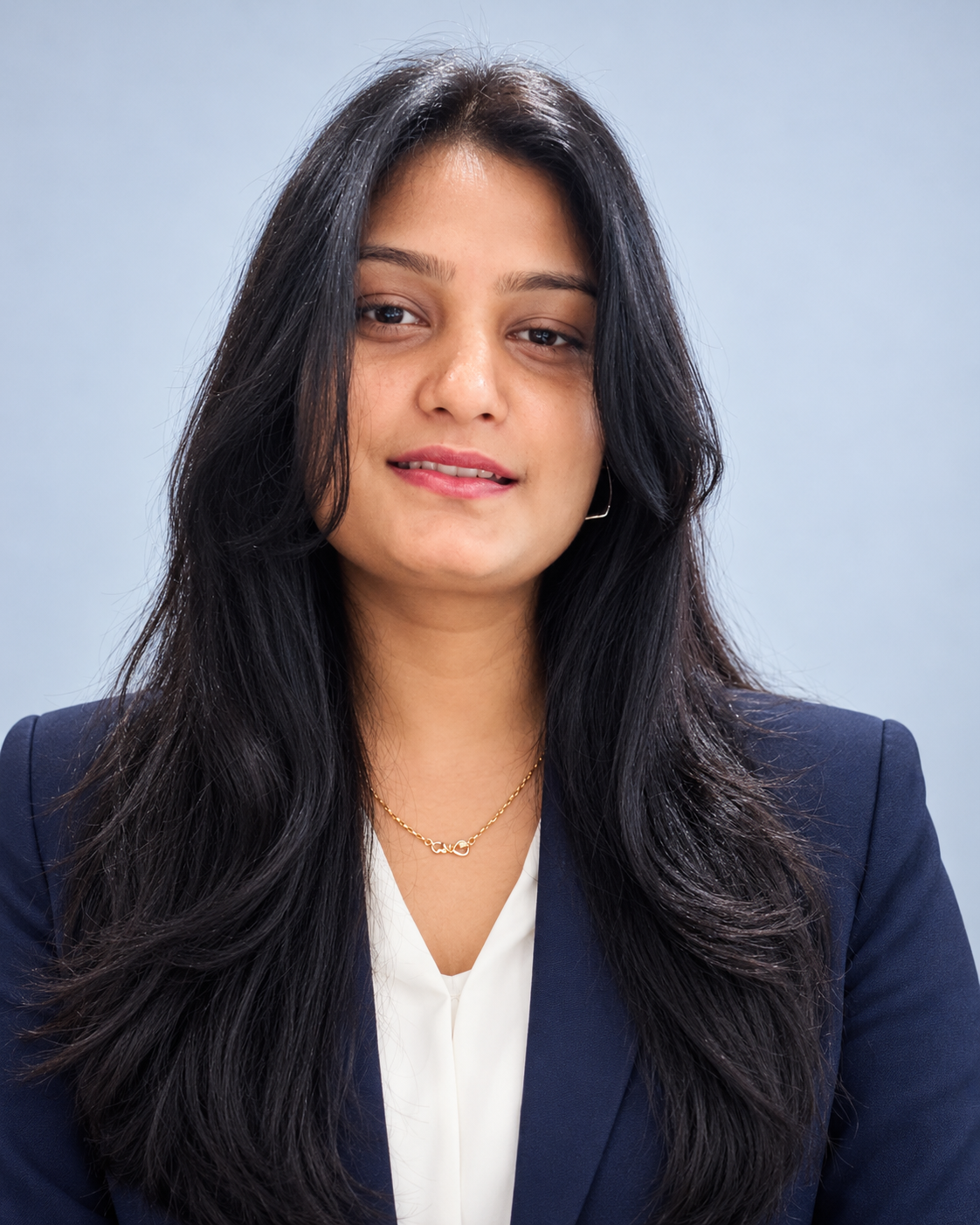
Er. Sushmita Bharti
Senior Software Engineer (React Developer)

Er. Navdeep Singh
Senior Software Engineer (UI/UX Developer)

Er. Ashish Mishra
IT Analyst / Full Stack Developer (Java, Angular)
Frequently asked questions
What is Python programming?
Python is a high-level, general-purpose programming language known for readable syntax and broad applications. It is used in web development, automation, data analysis, AI and software development.
What will I learn in the Python Programming Course at Learn Bizness?
The course develops programming fundamentals and practical Python skills. Depending on the curriculum, learners may explore syntax, variables, data types, conditions, loops, functions, data structures and problem-solving.
Is Python suitable for beginners?
Yes. Python is widely used as a beginner-friendly language because of its readable syntax. It provides a useful starting point for programming logic and software development.
Do I need mathematics to learn Python programming?
Advanced mathematics is not required for basic Python programming. Mathematics becomes more relevant when applying Python to data science, machine learning and scientific computing.
Can I learn Python without prior coding experience?
Yes. Beginners can start Python without previous programming experience. A structured course can introduce concepts gradually through examples, exercises and projects.
What are variables and data types in Python?
Variables store information in a program, while data types define the nature of that information. Python includes integers, floating-point numbers, strings, lists, tuples, sets and dictionaries.
What are loops in Python?
Loops execute a block of code repeatedly. Python provides for and while loops to perform repetitive operations efficiently.
What are functions in Python?
Functions are reusable blocks of code designed to perform particular tasks. They organize programs, reduce repetition and improve readability.
What are lists, tuples and dictionaries in Python?
These are built-in data structures. Lists are mutable sequences, tuples are immutable sequences and dictionaries store information in key-value pairs.
What is object-oriented programming in Python?
Object-oriented programming organizes code using classes and objects. Python supports concepts such as inheritance, encapsulation and polymorphism to create structured applications.
What is Python used for?
Python is used in web development, data analysis, artificial intelligence, machine learning, automation, scripting and software development. Applications depend on libraries and project requirements.
Can Python be used for data analytics?
Yes. Python is used for data processing, manipulation, analysis and visualization. It helps analysts work with datasets and extract insights.
Is Python useful for artificial intelligence and machine learning?
Yes. Python is commonly used in AI and machine learning. Its ecosystem includes libraries and frameworks for data preparation, model development and experimentation.
Can Python be used for web development?
Yes. Python can develop websites and web applications through suitable frameworks. It supports server-side programming, application logic and database integration.
What is the difference between Python and Java?
Both are general-purpose programming languages but differ in syntax, development approaches and common use cases. Python is known for concise syntax, while Java uses an explicit class-based structure and is widely used in enterprise software.
Does the Learn Bizness Python course include practical coding projects?
Learn Bizness emphasizes practical learning and project-based training. Students can apply Python concepts through coding exercises and projects according to the curriculum.
What career opportunities are available after learning Python?
Python skills may support roles such as junior Python developer, software developer trainee and automation developer, as well as some entry-level data roles. Options depend on additional skills and employer requirements.
Can I build a portfolio using Python programming?
Yes. Students can document suitable Python projects and assignments in a portfolio to demonstrate problem-solving ability, programming fundamentals and practical application.
Does Learn Bizness provide internship opportunities after Python training?
Learn Bizness offers internship opportunities after course completion through its in-house agency, subject to eligibility and selection. Python-related assignments depend on available projects and business needs.
Where can I learn Python programming in East Delhi?
Students can explore offline Python training at Learn Bizness in Preet Vihar, East Delhi. Online training options are also available for learners anywhere in the world.
Ready to write your first Python program?
Share your details and our counselor will get in touch with course information and next steps.